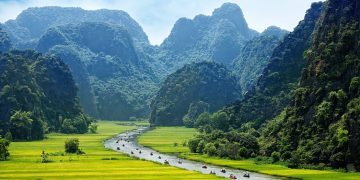











Vietnam’s Ha Long Bay, a UNESCO World Heritage site, is often lauded as one of the most stunning landscapes in the world. With its emerald green waters, thousands of towering limestone pillars, and an air of serene mystery, Ha Long Bay is more than just a tourist destination—it’s an iconic natural wonder that has captured the imagination of travelers, photographers, and geologists alike. But what exactly makes Ha Long Bay so remarkable? This article explores the geological, cultural, and ecological features that elevate Ha Long Bay to the status of a natural wonder.
The Geological Marvel of Ha Long Bay
Ha Long Bay, located in the Gulf of Tonkin in northeastern Vietnam, is famous for its dramatic seascape—an otherworldly vista of over 1,600 limestone islands and islets that rise precipitously from the water. The bay’s geological formations, which are over 500 million years old, are the result of complex natural processes that have shaped the landscape over millions of years.
The Formation of Ha Long Bay’s Limestone Pillars
The unique topography of Ha Long Bay is primarily the result of karst topography—a geological formation that arises from the erosion of soluble rocks like limestone. Over millions of years, rainwater, which is slightly acidic, slowly wore away the limestone bedrock, creating the massive, jagged peaks that characterize the bay. The limestone pillars, often covered with lush vegetation, are separated by narrow waterways and caves, creating an almost surreal scene.
What makes the limestone formations in Ha Long Bay especially fascinating is their age and variety. These karst towers were formed during the late Carboniferous period, roughly 300 million years ago, though the landscape as we know it today was primarily shaped during the last 20 million years. The karst landscape of Ha Long Bay is distinguished by its sharp ridges, smooth peaks, and steep cliffs, which have been sculpted by centuries of weathering, tidal action, and earthquakes.
Underground River Systems and Caves
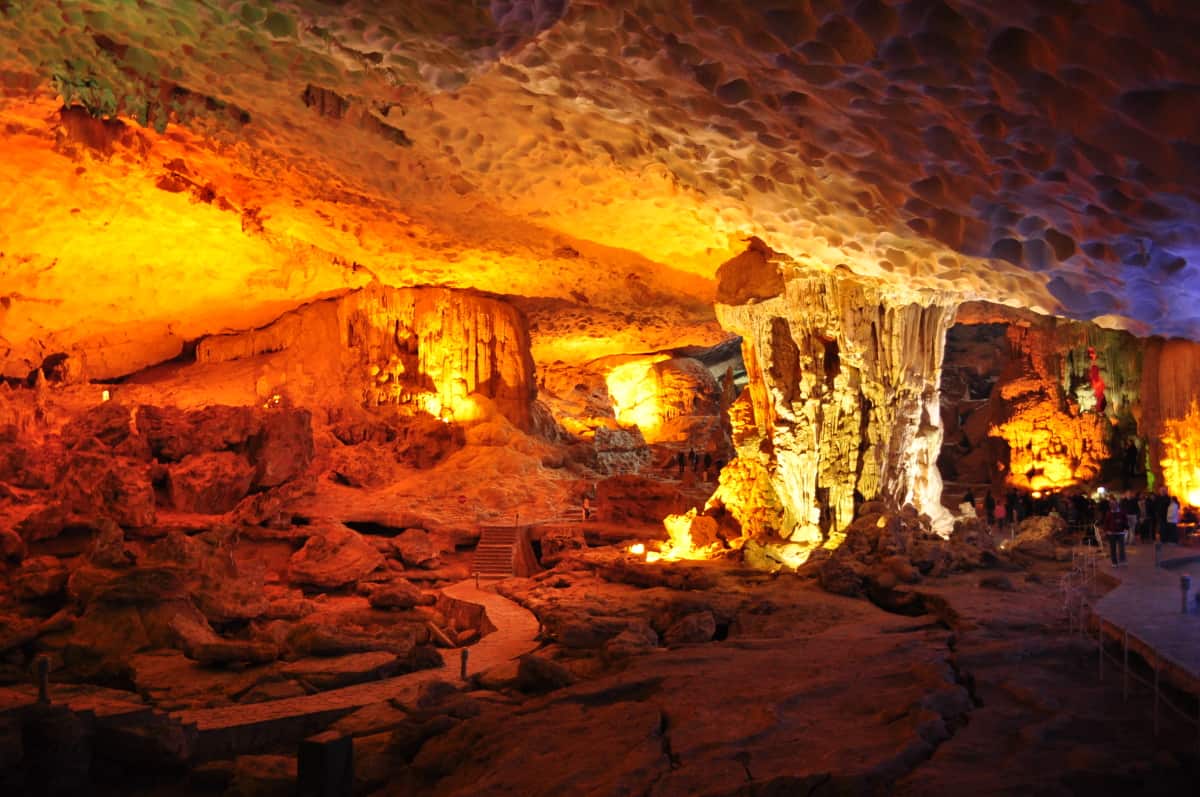
In addition to its towering limestone formations, Ha Long Bay is also home to a variety of caves and grottoes, many of which are accessible by boat. One of the most famous is Sung Sot Cave (Surprise Cave), a two-chambered cavern located on Bo Hon Island. Inside, visitors are treated to a stunning display of stalactites and stalagmites, as well as a series of interconnecting chambers that seem to stretch on forever.
Some caves in Ha Long Bay also contain underground rivers, which create a sense of mystique and adventure for those exploring the bay. These subterranean watercourses have cut through the limestone rock, forming intricate systems of tunnels and passages that add to the natural intrigue of the area.

The Rich Biodiversity of Ha Long Bay
Beyond its geological beauty, Ha Long Bay is also home to an incredible array of wildlife, both on land and in the water. The bay’s ecosystems, influenced by its coastal location, support a diverse range of species, from marine life to forest flora and fauna.
Marine Life in Ha Long Bay
Ha Long Bay’s clear, warm waters provide an ideal habitat for a variety of marine species, many of which are endemic to the region. The bay is rich in coral reefs, seaweed, and plankton, which attract fish and other marine creatures. Over 200 species of fish have been identified in Ha Long Bay, including rare species such as the golden catfish, as well as a number of shellfish, mollusks, and crabs.
In addition to its marine life, Ha Long Bay is a crucial stop for migratory birds. The bay’s mangrove forests, intertidal zones, and rocky islets offer shelter for a variety of bird species, including egrets, herons, and kingfishers, which feed and rest in the bay’s calm waters. The region’s biodiversity makes it an invaluable site for conservation efforts.
Forests and Terrestrial Wildlife
The islands and islets of Ha Long Bay are also covered by tropical forests, which are home to a variety of flora and fauna. In fact, many of the islands have been designated as nature reserves due to their rich biodiversity. The forests are home to several species of primates, such as macaques, as well as a variety of reptiles, including lizards and snakes.
The diversity of plant life is equally impressive, with many of the islands hosting dense jungles filled with banyan trees, ferns, and vines. The combination of lush greenery and dramatic limestone peaks creates an unparalleled visual contrast that adds to the allure of the bay.
Ha Long Bay’s Cultural Significance
In addition to its geological and ecological wonders, Ha Long Bay holds great cultural and historical significance for the Vietnamese people. The bay has been a site of human habitation for thousands of years, and its rich cultural heritage adds an extra layer of mystique to the landscape.
The Legend of Ha Long Bay
The name “Ha Long” translates to “Descending Dragon” in Vietnamese, and the bay is steeped in legend. According to one popular myth, the bay was formed by a family of dragons sent by the gods to protect the Vietnamese people from invading forces. The dragons, breathing fire and molten rock, created the islands and islets as a natural defense. As the dragons descended into the sea, they turned into stone, leaving behind the majestic limestone peaks that now dominate the bay.
This myth reflects the deep connection between the Vietnamese people and Ha Long Bay, as the bay is not only a place of beauty but also a symbol of national identity and resilience. It has inspired countless stories, poems, and artworks throughout history.
Human Habitation and Historical Sites
Ha Long Bay has been a center of human activity for thousands of years. Archaeological evidence shows that the area has been inhabited since the Paleolithic era, with several ancient cultures leaving their mark on the region. One of the most important archaeological sites in Ha Long Bay is the ancient fishing village of Cua Van, which has been continuously inhabited for over 1,000 years.
The region is also home to several historical sites, including remnants of ancient structures and caves that were used as shelters during periods of war. During the Vietnam War, the bay’s isolated islands and caves provided refuge for the Vietnamese military and civilians, further solidifying its importance in Vietnamese history.
Ha Long Bay and the Vietnamese Economy
In modern times, Ha Long Bay has become a vital part of Vietnam’s tourism industry. It attracts millions of visitors each year, who come to explore its natural beauty, relax on its beaches, or partake in water activities such as kayaking, boating, and swimming. The bay has also become an important hub for fishing and aquaculture, providing a livelihood for many of the local communities living on its islands.
The economic importance of Ha Long Bay has led to increased efforts to preserve its natural beauty while promoting sustainable tourism. In recent years, the Vietnamese government has implemented various initiatives to protect the bay from overdevelopment and pollution, ensuring that future generations can continue to enjoy its splendor.
Ha Long Bay’s Place Among the World’s Natural Wonders
Ha Long Bay’s status as a UNESCO World Heritage site is a testament to its outstanding natural beauty and global significance. The bay is one of the most visited tourist destinations in Vietnam, and its breathtaking scenery has made it a popular subject for photographers and filmmakers. Its karst landscape is often compared to other famous geological formations, such as the limestone cliffs of Thailand’s Phi Phi Islands or the stalactite-filled caves of New Zealand’s Waitomo Caves.
What sets Ha Long Bay apart from other natural wonders is the harmonious interplay between its geology, ecology, and cultural significance. It’s not just the physical beauty of the landscape that makes Ha Long Bay a natural wonder; it’s the sense of mystery and awe that the bay inspires, as well as its deep connection to the people who have lived there for centuries.
Conclusion
Ha Long Bay stands as a testament to the power of nature and the enduring human connection to the land. From its extraordinary geological formations to its rich biodiversity and cultural heritage, Ha Long Bay embodies the essence of what makes a natural wonder. Its pristine waters, towering limestone islands, and historical significance make it a destination that not only captivates visitors but also reminds us of the delicate balance between human activity and the natural world. Whether you are a geologist, an ecologist, or simply someone seeking beauty and tranquility, Ha Long Bay offers an unforgettable experience.