









Rome, the Eternal City, is a sprawling testament to the might, mystery, and multifaceted history of one of the world’s greatest civilizations. When people think of Rome, their minds often immediately drift toward iconic landmarks such as the Colosseum, St. Peter’s Basilica, and the Roman Forum. However, the layers of history in this ancient city go far beyond these well-trodden monuments. If you look past the crowds and tourist traps, you’ll uncover a hidden, fascinating history—one that tells the story of forgotten emperors, secretive cults, and dramatic changes that have shaped the city into what it is today.
The Origins of Rome: Myth Meets History
The story of Rome’s origins is a blend of myth and history. According to Roman legend, the city was founded by Romulus and Remus in 753 BC. The twins, born to the princess Rhea Silvia and the god Mars, were abandoned on the banks of the Tiber River and raised by a she-wolf. As the myth goes, Romulus killed Remus in a dispute over the city’s future location, becoming the first ruler of Rome.
However, archaeology and history tell a slightly different story. Evidence suggests that the area now known as Rome was likely inhabited as early as the 10th century BC. The Etruscans, a civilization to the north of Rome, played a crucial role in the early development of the city, influencing Roman culture, religion, and governance. While the myth of Romulus and Remus may be steeped in legend, the early Romans’ connections to the Etruscans and their eventual break from Etruscan kings in 509 BC marked a crucial turning point.
The Roman Republic: Politics and Power
After overthrowing the Etruscan monarchy, Rome established a republican government, which lasted for nearly five centuries. During this time, Rome expanded from a small city-state to a dominant power in the Mediterranean world. The Roman Republic was marked by its complex political system, characterized by a mixture of elected officials and aristocratic control. The Senate, composed of wealthy patricians, held significant power, while the plebeians (common citizens) gained their own political representation over time through the Tribunes.
The Republic was not without its challenges. Rivalries between powerful families, corruption, and military conquests led to frequent political instability. The wars with Carthage (the Punic Wars) were particularly significant, especially the Second Punic War, in which the famous general Hannibal crossed the Alps with elephants to attack Rome. In the end, Rome emerged victorious, and Carthage was utterly destroyed.
However, as Rome’s power expanded, the Republic’s political system began to falter under the weight of internal struggles and military conquests. The rise of figures like Julius Caesar, Pompey, and Crassus—known as the First Triumvirate—marked the beginning of the end for the Roman Republic. The power struggle between Julius Caesar and Pompey ultimately led to civil war, and in 49 BC, Caesar famously crossed the Rubicon River, signaling the start of his dictatorship.
The Roman Empire: Glory and Decline
The transition from Republic to Empire was swift. In 27 BC, Caesar’s adopted heir, Octavian (later Augustus), became the first Roman Emperor. Augustus implemented sweeping reforms, transforming Rome from a city of stone to a city of marble, with grand buildings, temples, and public spaces. Under Augustus and his successors, the Roman Empire reached its zenith, stretching from Britain to Egypt and from Spain to Mesopotamia. The Pax Romana, or Roman Peace, lasted for about two centuries, fostering trade, culture, and prosperity across the empire.
Yet, as with all empires, internal corruption and external pressures eventually led to Rome’s decline. In the third century AD, the Empire was beset by economic crises, military instability, and frequent changes in leadership. This period of turmoil, known as the “Crisis of the Third Century,” saw the Empire fracture into separate regions.
In 395 AD, the Roman Empire was officially split into the Western Roman Empire, with its capital in Rome, and the Eastern Roman Empire, with its capital in Constantinople. While the Eastern Empire would survive for nearly another thousand years, the Western Roman Empire began its slow collapse, culminating in the sack of Rome by the Visigoths in 410 AD and the eventual fall of Rome in 476 AD.
The Lost Rulers: Emperors and Power Struggles
While the stories of emperors like Augustus, Nero, and Constantine are well known, the history of Rome is also populated with lesser-known rulers whose reigns tell fascinating stories of ambition, betrayal, and tragedy. For example, Emperor Carus (283-285 AD), whose reign was marked by military campaigns and a mysterious death, is rarely mentioned in popular accounts of Roman history.
Then there is the tragic story of Emperor Elagabalus (218-222 AD), known for his eccentricities and excesses. Ascending to the throne at just 14 years old, Elagabalus was infamous for his religious zealotry, particularly his devotion to the sun god Elagabal, whom he sought to establish as the primary deity of Rome. His reign, marked by scandalous behavior, ended in assassination.
Another emperor, Pertinax, assumed the throne after the assassination of Commodus in 192 AD. He was an able and well-intentioned ruler, but his brief reign was marked by attempts to reform the military and restore order, which ultimately led to his assassination by the Praetorian Guard—a telling moment in the history of Roman political instability.
Beneath the Streets: Hidden Monuments and the Underground
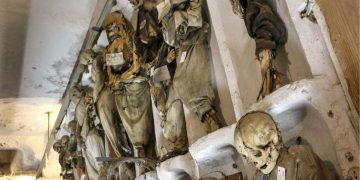
Beyond the well-known monuments of ancient Rome, the city hides a wealth of lesser-known archaeological treasures. The Catacombs of Rome, for instance, are a vast network of underground burial sites where early Christians were laid to rest. These catacombs, some of which stretch for miles, contain thousands of tombs, frescoes, and inscriptions that provide valuable insights into the religious practices of early Christians. The Catacombs of San Callisto and San Sebastiano are among the most famous, though many remain inaccessible to the public.
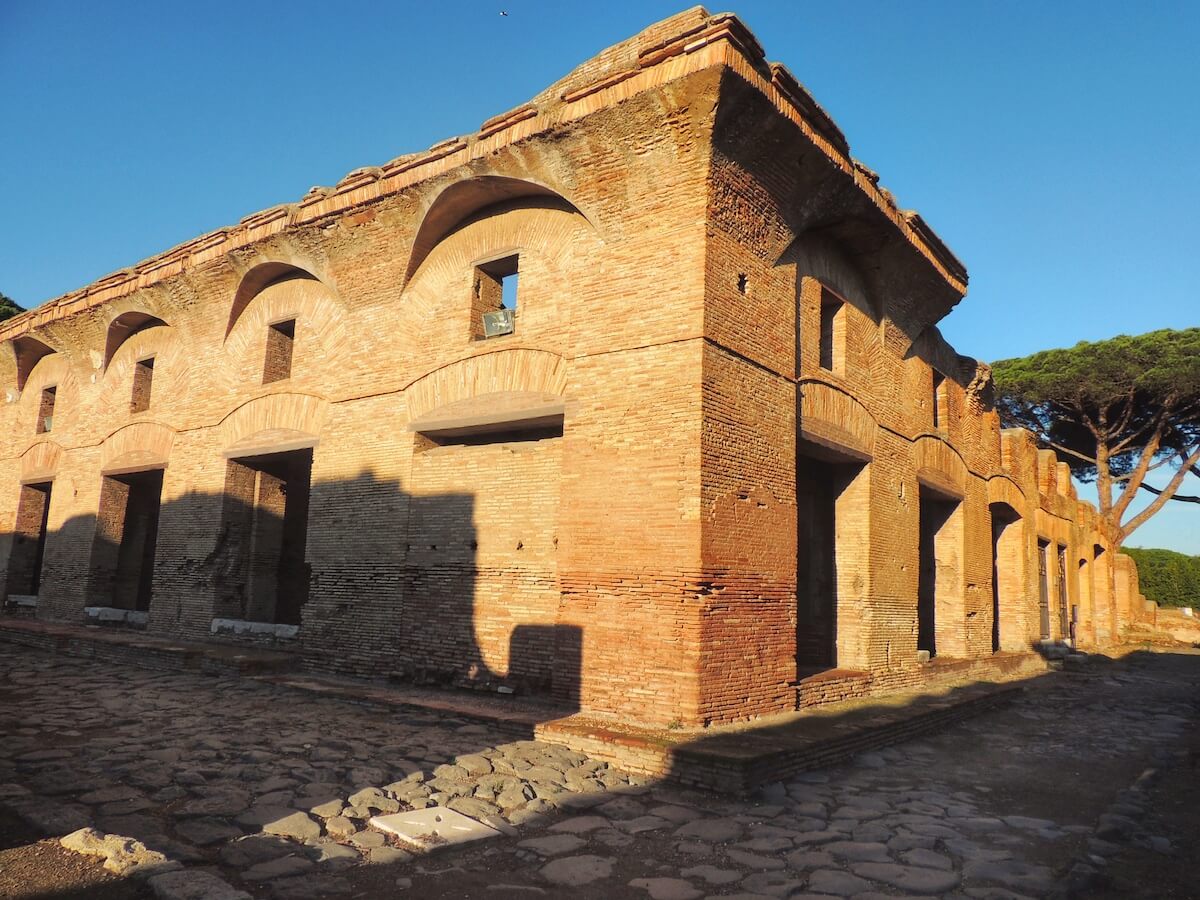
Another hidden gem beneath Rome is the ancient underground city of Ostia Antica. Once the bustling port of ancient Rome, Ostia was abandoned and buried under centuries of silt and sand. Today, Ostia’s ruins are remarkably well-preserved, offering a glimpse into the daily life of Roman citizens. With its temples, bathhouses, and residential buildings, Ostia is one of the best-preserved Roman sites, though it is often overlooked in favor of the more famous landmarks.
One of Rome’s most enigmatic underground features is the well-preserved Mithraeum, a secretive temple dedicated to the god Mithras. Mithraism was a mystery religion that became popular among Roman soldiers and is thought to have been one of the most significant rival religions to early Christianity. The Mithraeum beneath the Basilica of San Clemente provides a glimpse into the secretive nature of this cult, with its intricate iconography and mysterious rituals.
Rome’s Dark Past: Emperors, Conspiracies, and Assassinations
Rome’s history is marked by ruthless political intrigue, assassination plots, and shifting allegiances. The most famous and dramatic examples of this are the assassinations of Julius Caesar and Caligula. Caesar’s assassination, plotted by his closest friends, including Brutus, is one of the most iconic moments in world history, immortalized in Shakespeare’s play. The event marked the end of the Roman Republic and the beginning of the rise of the Roman Empire.
Caligula’s reign (37-41 AD) was infamous for his cruelty and bizarre behavior. His extravagant spending, erratic decisions, and cruelty toward both the Senate and his family led to a conspiracy to murder him, culminating in his assassination by members of the Praetorian Guard.
The Eternal City: Rome’s Legacy
The legacy of Rome is not confined to its ancient structures and monuments but extends to its cultural, legal, and intellectual contributions. Roman law, for example, continues to influence legal systems around the world today. The concept of “innocent until proven guilty” and other principles of modern jurisprudence can be traced back to Roman law.
Rome also contributed immensely to architecture and engineering. The development of concrete allowed the Romans to build large, enduring structures such as the Pantheon, whose dome remains the world’s largest unreinforced concrete dome. The Romans’ mastery of aqueducts, roads, and urban planning laid the foundation for cities throughout the Western world.
As the city of Rome grew and evolved over centuries, it remained a beacon of power, culture, and innovation. Today, while it may no longer dominate the known world as it once did, its influence remains undeniable in fields as diverse as politics, art, architecture, and philosophy.
Conclusion: A City of Many Layers
Rome is a city of constant reinvention. Beneath the tourist attractions and overrun sites lies a vast and rich tapestry of history, from the grandiose to the obscure. Whether it’s the buried remains of ancient temples, the stories of forgotten emperors, or the hidden catacombs beneath the city streets, Rome’s hidden history is waiting to be discovered. So, the next time you visit the Eternal City, take a moment to look beyond the Colosseum and unearth the lesser-known tales that continue to shape its identity.