











Stories are as old as human consciousness. They have been the vehicle for culture, memory, and imagination since our ancestors first huddled around flickering fires. But beneath the surface of every tale—whether a myth, a novel, or a blockbuster film—lurks a hidden code, a subtle architecture that shapes meaning, emotion, and perception. This hidden code is not merely a set of literary devices; it is a complex interplay of psychology, culture, and cognition that communicates far more than the words on the page.
The Anatomy of Storytelling
At its core, storytelling is structured communication. From ancient epics like The Iliad to contemporary digital narratives, stories follow patterns that resonate deeply with the human mind. One way to understand these patterns is through the concept of narrative DNA—a term that encapsulates the recurrent structures and archetypes embedded in storytelling across time and geography.
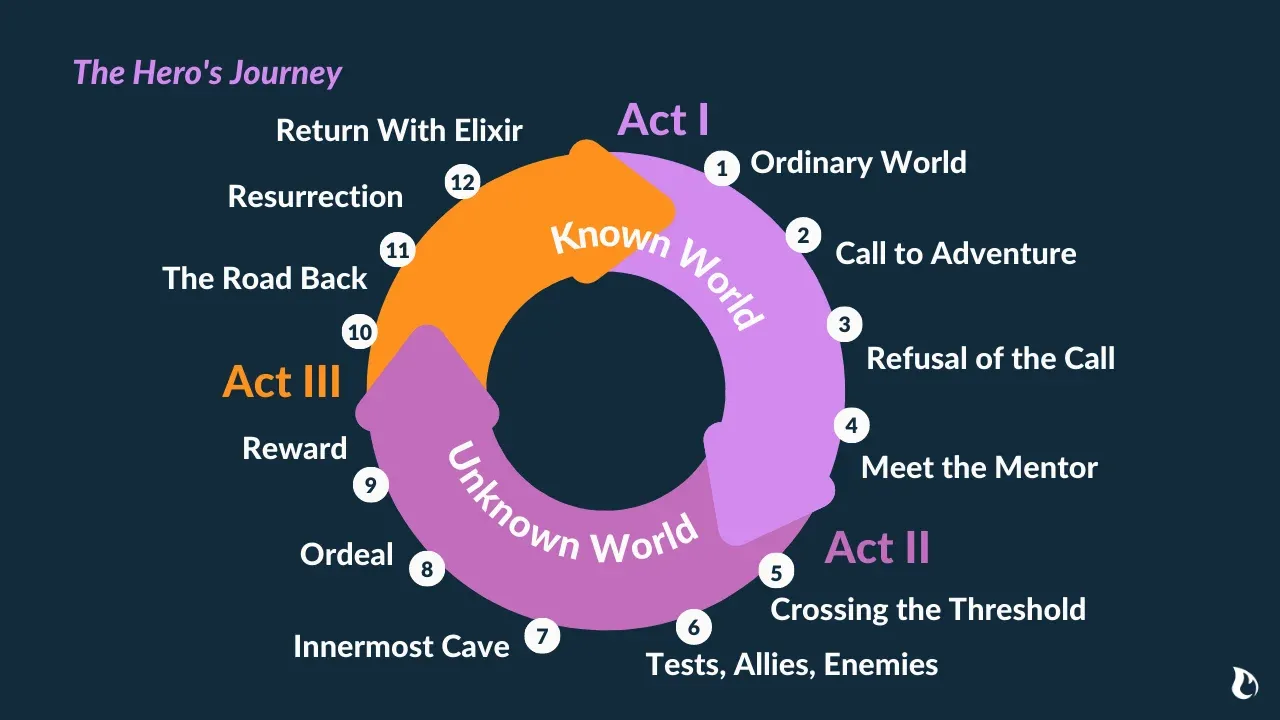
Joseph Campbell, the renowned mythologist, popularized the “monomyth” or the hero’s journey. This structure, present in myths worldwide, can be seen as a hidden code. It organizes the story into a recognizable rhythm: departure, initiation, and return. But beyond the surface, there are subtler codes at work: the interplay of character psychology, symbolic imagery, and thematic resonance that collectively influence how the story is internalized.
Every story has layers. On the first layer, the plot moves forward. On the second, characters develop, conflicts emerge, and themes manifest. The third layer—the hidden code—operates almost invisibly. It’s found in the micro-patterns of repetition, the careful calibration of tension and release, and the subtle nods to cultural archetypes that elicit unconscious recognition.
Linguistic Codes and Semantic Patterns
Language itself carries hidden codes. Literary theorists often discuss intertextuality—the idea that texts speak to each other across time. Words are not isolated; they are nodes in a vast semantic network. Authors leverage this network to embed meaning beyond the immediate sentence. Consider the choice of metaphors, syntax, or even punctuation. These elements influence rhythm, expectation, and emotional tone.
Take, for instance, the use of color in literature. “Red” rarely functions solely as a descriptor of hue. It may signal passion, danger, or mortality, depending on context. Such associations are culturally coded, but they resonate universally at a psychological level. An attentive reader picks up on these signals subconsciously, experiencing emotional responses without explicit awareness.
Moreover, narrative pacing itself can encode meaning. Short, clipped sentences often accelerate tension, mimicking the physiological effect of adrenaline. Long, meandering sentences encourage reflection and immersion, paralleling cognitive processing patterns. In this way, the story itself becomes a coded physiological experience.
Symbolism: The Universal Language
Symbols operate as one of the most potent forms of hidden coding in stories. A symbol distills complex ideas into a recognizable form. Water, for example, is nearly universally associated with life, change, or purification. Mountains may symbolize obstacles, spiritual ascent, or permanence. The repetition and layering of symbols create a narrative resonance that transcends literal interpretation.
Interestingly, symbols often work through ambiguity. A single object can carry multiple meanings, which allows the audience to project personal interpretations. This multiplicity is itself a coded strategy: the story is not a static artifact but a dynamic interaction between author and audience, mediated through symbolic cues.
Archetypal symbols are particularly revealing. They tap into what Carl Jung called the “collective unconscious”—deep-seated psychological templates that recur across cultures. The shadow, the mentor, the trickster: these figures are not arbitrary. They are embedded codes that signal moral, psychological, or social truths without explicit exposition. When a story employs these archetypes, it resonates on a subconscious level, guiding interpretation and emotional response.

Patterns in Plot: Mathematics of Story
Beneath the lyrical and symbolic layers, stories often exhibit mathematical patterns. Narrative theorists have identified structures such as Freytag’s pyramid—exposition, rising action, climax, falling action, resolution—as a classic model of tension modulation. This is essentially a code that exploits cognitive expectations: humans instinctively seek resolution and pattern completion.
Modern computational analysis of literature has revealed even more intricate patterns. Recurrence of themes, sentence length variation, and character interaction networks can be quantitatively modeled. These patterns are not random; they encode aesthetic and emotional experiences that the human brain is wired to decode. In other words, our attraction to well-told stories is not solely cultural—it is neurological.
Even suspense, a staple of thriller and mystery genres, operates through coded timing. The deliberate withholding of information, the misdirection of attention, and the strategic placement of revelations all exploit cognitive biases such as expectation and memory recall. In this sense, a story is not merely a narrative—it is a sophisticated algorithm for guiding attention, emotion, and comprehension.
Cultural Codes and Contextual Resonance
No story exists in a vacuum. Every narrative is embedded within a cultural milieu, and culture itself functions as a codified system of meaning. Readers and viewers decode stories through a lens shaped by history, language, religion, and social norms. This is why certain stories resonate universally, while others remain opaque outside their cultural context.
Cultural codes are often implicit. They manifest as social roles, rituals, or taboos that shape narrative logic. A story about honor in feudal Japan carries layers of expectation distinct from a story about honor in contemporary Western society. By understanding these codes, storytellers can craft narratives that communicate more than the surface plot, embedding layers of cultural commentary beneath the apparent drama.
Moreover, globalization has introduced cross-cultural coding. Modern narratives frequently employ hybrid symbols, archetypes, and plot devices that are interpretable across multiple contexts. This blending of codes allows for stories that feel simultaneously familiar and novel to diverse audiences, demonstrating the universality and adaptability of narrative architecture.
Cognitive Science of Hidden Codes
Cognitive science provides a window into why hidden codes are so effective. Our brains are pattern-recognition machines. From infancy, humans detect repetition, causality, and emotional cues. Stories exploit these neural tendencies, guiding comprehension and eliciting empathy.
Mirror neurons play a role in character identification. When a protagonist experiences joy, fear, or pain, the observer’s brain simulates those states, creating immersive engagement. The hidden code here involves pacing, perspective, and narrative empathy—all designed to activate neural mirroring.
Memory consolidation is another factor. Stories encode information in a structured, emotionally resonant manner that enhances recall. Historians, educators, and marketers all leverage this principle: the hidden code of a story is optimized for retention. Emotionally charged narrative beats, repeated motifs, and moral arcs function as mnemonic devices embedded in the fabric of the tale.
The Role of Ambiguity
Paradoxically, hidden codes often thrive in ambiguity. When a story leaves certain elements undefined or open to interpretation, it engages the audience in active decoding. The mind, confronted with uncertainty, generates hypotheses, fills gaps, and constructs meaning. This cognitive participation strengthens engagement and investment, making the story feel personally significant.
Poetry, magical realism, and metafiction are genres that exploit ambiguity systematically. The hidden codes are not explicit instructions but rather frameworks for interpretation. Readers become co-creators, decoding the narrative in ways that reflect personal experience, cultural background, and cognitive biases.
Hidden Codes in Digital Storytelling
In the digital era, stories have evolved into interactive and transmedia formats. Video games, virtual reality experiences, and social media narratives employ sophisticated hidden codes. Branching storylines, environmental storytelling, and even interface design function as narrative signals.
For example, in open-world games, subtle environmental cues—lighting, sound, spatial design—encode narrative information without a single word being spoken. Players decode the story by interpreting these signs, effectively translating hidden codes into cognitive and emotional experience. This phenomenon demonstrates that the hidden code of storytelling is not confined to text; it extends across sensory and interactive modalities.
Moreover, algorithm-driven storytelling, such as AI-generated narratives, relies on formalized codes to maintain coherence, tension, and character consistency. These systems mirror the implicit coding humans have evolved over millennia, illustrating that hidden narrative structures are not merely cultural artifacts but fundamental cognitive templates.
Ethics and Power in Storytelling Codes
Hidden codes are not neutral. They shape perception, reinforce ideologies, and influence behavior. Advertisers, propagandists, and storytellers alike understand that narrative structure, symbol choice, and emotional pacing can guide thought and action.
Consider propaganda films or persuasive advertising. They encode moral and social messages using narrative techniques that mimic natural story cognition. The audience often remains unaware of the coding, yet the influence is potent. This underscores the responsibility of storytellers: mastery of hidden codes entails ethical considerations about manipulation, bias, and consent.
On the other hand, awareness of narrative coding empowers critical reading. By recognizing archetypes, pacing strategies, and symbolic patterns, audiences can decode intended meaning, question assumptions, and uncover latent ideologies. The hidden code, when revealed, shifts from covert influence to conscious understanding.
The Future of Story Codes
As artificial intelligence, neuroscience, and immersive media advance, our understanding of hidden story codes will deepen. Predictive modeling may allow creators to tailor narratives to individual cognitive and emotional profiles, maximizing engagement and impact.
Yet, the essence of hidden codes is likely to remain the same: an intricate balance of structure, symbolism, and psychological resonance that speaks to universal human experience. While technology may enhance delivery, the foundational principles—pattern recognition, emotional mirroring, symbolic layering—are rooted in the architecture of the human mind.
Stories will continue to carry hidden codes, not as a gimmick, but as an intrinsic feature of narrative itself. Every fable, epic, or novel is both a surface tale and a coded message, awaiting discovery by those willing to read between the lines.
Conclusion
Is there a hidden code in every story? The evidence suggests yes. From linguistic nuances and symbolic motifs to cognitive pacing and cultural subtext, stories encode meaning on multiple layers simultaneously. These codes are designed to be decoded, yet often operate below conscious awareness, shaping emotion, memory, and interpretation.
Understanding these codes is not merely an academic exercise—it enhances our appreciation of literature, media, and human communication. It illuminates the invisible scaffolding that supports narrative magic, revealing that every story is both a journey and a puzzle, a mirror and a map.
Stories, in their hidden coding, are a testament to human ingenuity, curiosity, and the universal drive to communicate, connect, and understand. The next time you immerse yourself in a tale, pause and look deeper: beneath the surface, a carefully engineered code is at work, inviting you to decode, engage, and experience the profound interplay of mind and story.