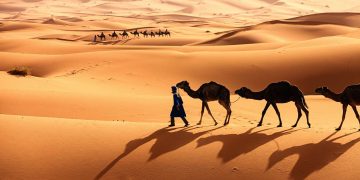









The Sahara Desert is often viewed as one of the harshest, driest places on Earth. A vast stretch of barren land, it conjures images of scorching heat, endless sand dunes, and desolation. But is it truly just a desert? The Sahara, while undeniably a desert in the classic sense, is far more complex and intriguing than its popular image suggests. From ancient human history to its modern ecological significance, the Sahara is a land of striking contrasts and hidden mysteries. This article aims to explore the Sahara’s diverse aspects — examining its geography, history, ecosystems, and its broader role in the planet’s environmental health.
The Geography of the Sahara: A Land of Extremes
Covering much of North Africa, the Sahara spans an area of approximately 9 million square kilometers, making it the largest hot desert in the world. Stretching across 11 countries, including Algeria, Chad, Egypt, Libya, Mali, Mauritania, Morocco, Niger, Western Sahara, Sudan, and Tunisia, the desert’s landscape varies considerably.
While many envision the Sahara as a monotonous sea of sand, in reality, only about 20% of its terrain is made up of sand dunes. The rest of the desert consists of rocky plateaus, gravel plains, mountain ranges, and vast, dry riverbeds known as wadis. The desert’s highest point is Mount Tahat in Algeria, reaching an altitude of 2,918 meters (9,573 feet), while the lowest point, the Qattara Depression in Egypt, sits at 133 meters (436 feet) below sea level.
The Sahara’s climate is extreme, with daily temperature fluctuations that can reach 60°C (140°F) between daytime highs and nighttime lows. Summers are sweltering, and rainfall is incredibly scarce, averaging less than 3 cm annually in most areas. Despite this, the Sahara is not an entirely lifeless expanse; rather, it is a place of extreme adaptation and surprising biodiversity.
The Sahara’s Historical Significance
The Sahara’s story is not only one of desolation but also one of cultural and historical importance. For millennia, this seemingly inhospitable landscape has been a crossroads for human civilizations. Thousands of years ago, the Sahara was not a desert at all. In fact, it was a lush, green region teeming with lakes, rivers, and diverse wildlife, a fact that has been revealed through archeological discoveries.
Early Human Habitation
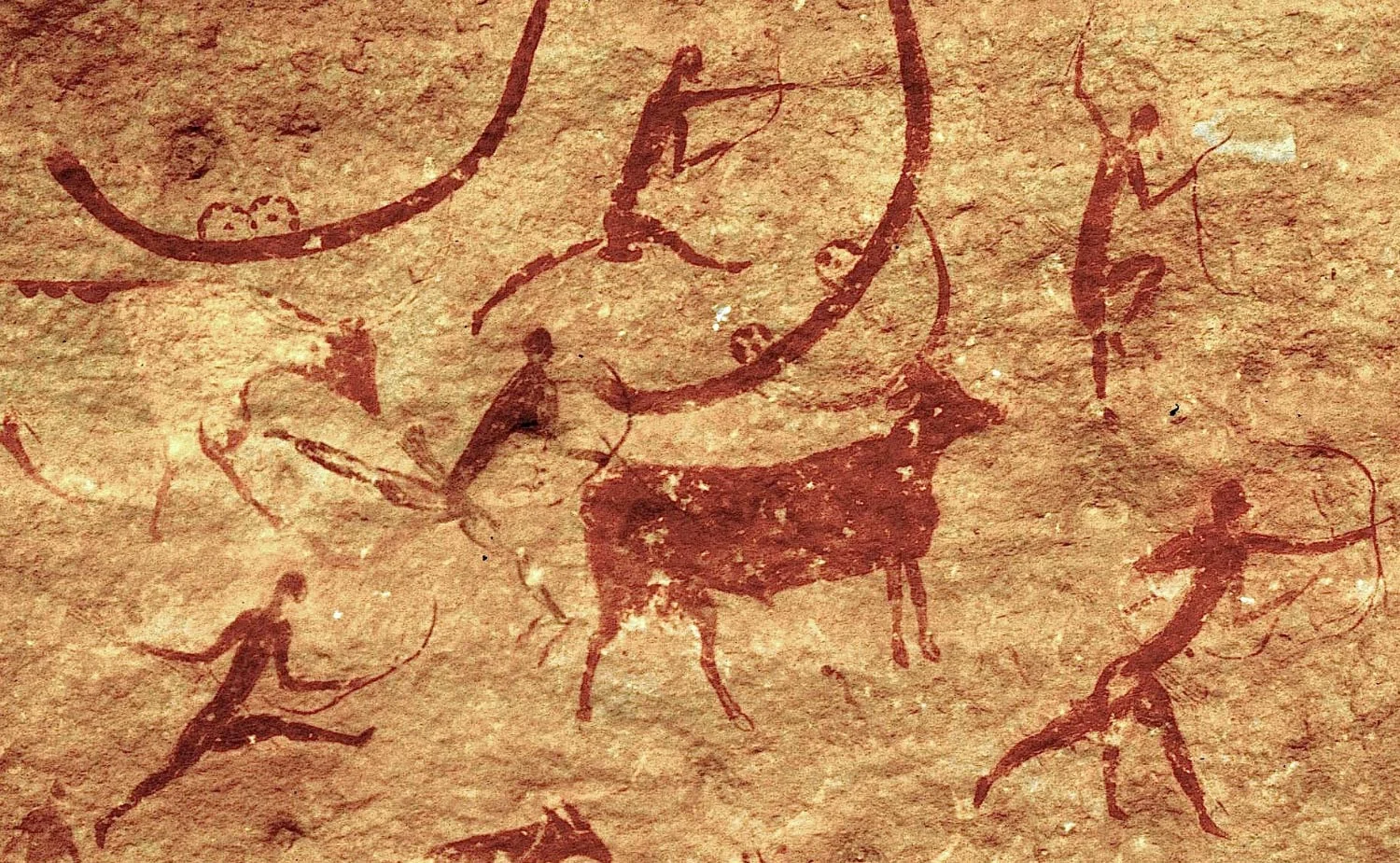
Evidence suggests that humans have lived in the Sahara for over 10,000 years. Early hunter-gatherers once roamed the fertile plains, leaving behind cave paintings and engravings in sites such as Tassili n’Ajjer in Algeria and the Cave of Swimmers in Egypt. These ancient artworks depict scenes of daily life, including herding cattle, swimming, and interacting with wild animals — suggesting that the region was once home to a much wetter and more temperate climate.
Around 4,000 years ago, the Sahara began to dry out, forcing these early human populations to adapt or migrate. This gradual transformation from a green paradise to the arid desert we know today had significant cultural implications. Ancient trade routes, such as the Trans-Saharan Trade Routes, began to form, linking sub-Saharan Africa to the Mediterranean world. Goods like salt, gold, and ivory passed through the desert, fostering exchanges of culture, ideas, and technology between distant civilizations.
The Berbers and the Desert
One of the most enduring cultures of the Sahara is that of the Berber people, indigenous to the region. The Berbers, known for their nomadic lifestyle, have lived in the Sahara for thousands of years. Their traditional knowledge of desert navigation, survival techniques, and the intricacies of oases has allowed them to thrive in a harsh environment. Their language, Tamazight, remains a vital part of North African heritage today.
The introduction of Islam to the Sahara in the 7th century further shaped the region’s history. Islamic merchants, scholars, and travelers moved across the desert, bringing with them new religious and cultural influences. The spread of Islam helped solidify the Sahara as a major hub of commerce, learning, and religious exchange.
The Sahara Today: An Ecological Paradox
In the 21st century, the Sahara is no longer just a barren wasteland — it plays a crucial role in both regional and global ecosystems. Despite its arid conditions, the Sahara is home to a remarkable variety of life, from desert-adapted plants to rare wildlife. Its ecosystems, while fragile, are vital for maintaining biodiversity in the broader African and global context.
Flora of the Sahara
The Sahara may seem devoid of vegetation at first glance, but it is home to over 2,000 species of plants. Many of these plants have adapted to extreme conditions by developing deep root systems that reach underground water sources, or by conserving moisture with thick, waxy leaves. Some of the most iconic plants in the Sahara include the date palm, the acacia tree, and the hardy tamarisk shrub.
Fauna of the Sahara
Despite the scarcity of water, the Sahara is teeming with life. The desert is home to a variety of animals, many of which have adapted to its harsh climate. The Saharan antelope, the addax, is one of the most endangered species in the world, but it thrives in the desert’s remote areas. Other animals include the desert fox, the Saharan cheetah, and the iconic dromedary camel — an animal perfectly suited to life in the desert due to its ability to survive with minimal water.
One of the most fascinating aspects of Sahara wildlife is its migratory species. Birds like the desert lark and the sandgrouse have adapted to the Sahara by developing efficient ways of finding food and water. Some even migrate long distances between Africa and Europe, passing through the desert’s vast emptiness in search of favorable conditions.

Oases: Life in the Desert
Oases in the Sahara are like precious jewels, sustaining life in the middle of an otherwise arid landscape. These natural water sources support entire communities of humans and wildlife. The oases of the Sahara are often surrounded by palm groves and fertile soil, allowing for the cultivation of crops such as dates, wheat, and barley.
Many of the desert’s traditional human populations have adapted to life around these oases, creating sustainable systems of agriculture and trade. The importance of oases is not just ecological but also cultural, as they have served as gathering places for travelers and merchants for centuries.
The Sahara’s Role in Global Climate and Environment
The Sahara is more than just a local feature of the African continent. It plays a significant role in global climate patterns and atmospheric processes, with far-reaching effects on both regional and global ecosystems.
Dust and Airborne Particles
One of the Sahara’s most significant ecological contributions is the dust that it sends into the atmosphere. Winds blow across the desert, picking up vast amounts of dust and sand, which are then carried across the Atlantic Ocean, often reaching the Americas. This dust is rich in minerals, particularly phosphorus, which plays a key role in fertilizing the Amazon rainforest, one of the world’s largest carbon sinks.
The Sahara’s dust also has a significant impact on the Caribbean and the southeastern United States, affecting air quality, agriculture, and even weather patterns. The phenomenon of Saharan dust plumes is a reminder that the Sahara is deeply connected to ecosystems far beyond its own borders.
The Sahara and Climate Change
The Sahara is particularly vulnerable to climate change. While the desert’s extreme temperatures and arid conditions make it difficult for many organisms to thrive, it is nonetheless a fragile ecosystem. The desert’s biodiversity, already under threat from human activity, is increasingly impacted by global warming and shifting weather patterns.
Some scientists predict that climate change could lead to an expansion of the Sahara, as drought conditions worsen in surrounding areas. On the other hand, there are also concerns that the desert’s shifting boundaries may displace human populations and disrupt traditional ways of life. The Sahara’s role in the global climate system is likely to become even more critical as the world grapples with the effects of climate change.
Conclusion: The Sahara Beyond the Sand
The Sahara Desert is much more than just a dry, barren wasteland. It is a dynamic region that has shaped human history, influenced global ecosystems, and continues to play a vital role in our understanding of the environment. From its ancient role as a cradle of civilization to its modern ecological significance, the Sahara is a place of enduring mystery and importance.
While the desert may be synonymous with desolation, it is also a symbol of resilience, adaptability, and life in its most extreme forms. As we face challenges like climate change and environmental degradation, understanding the Sahara’s complex ecosystems and its global significance will be essential for preserving its unique natural heritage and securing a sustainable future for both the desert and the planet.