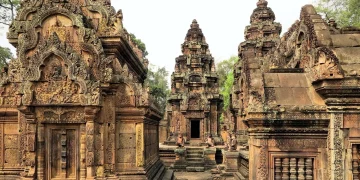











Cambodia, a land of rich history, ancient cultures, and awe-inspiring landscapes, is home to some of the most iconic monuments in the world, the most famous of which is Angkor Wat. However, beyond the renowned temples, Cambodia hides many lesser-known, yet equally captivating, temples. These hidden treasures, tucked away in dense jungles, perched atop mountains, or secluded in remote corners of the country, offer a unique experience for travelers and history enthusiasts. For those willing to venture off the beaten path, these forgotten ruins offer a deeper connection to Cambodia’s spiritual and historical past.
But why are these hidden temples worth the journey? The answer lies in their intrigue, historical significance, raw beauty, and the sense of discovery they offer. In this article, we will explore the allure of these hidden temples and why they remain one of the most fascinating aspects of Cambodia’s rich cultural heritage.
The Mystique of the Hidden Temples
While Angkor Wat, Bayon, and Ta Prohm draw millions of visitors each year, the hidden temples are a world away from the crowds and commercialization. They sit quietly in the backdrop, often overlooked by mainstream tourism, but are steeped in mystery and untouched by modern development.
These temples are often hidden by thick forests, overgrown with vines, or sometimes even lost to time itself. Many have been abandoned for centuries, their stones slowly being reclaimed by nature. The air around them feels heavy with secrets, and every step forward unveils another layer of Cambodia’s ancient history.
For those who venture to these less-visited sites, the allure is not just the archaeological marvels but the sense of intimacy and connection. It’s like stepping into a time machine and witnessing a civilization at its peak — without the barriers of crowds, noise, or commercialization. It’s you, the temple, and the past. In some cases, a single afternoon spent exploring a hidden temple can feel like a private audience with history.
A Rich Historical Tapestry
Cambodia’s hidden temples are primarily remnants of the Khmer Empire, a powerful civilization that once ruled much of Southeast Asia between the 9th and 15th centuries. The Khmer Empire was known for its advanced architecture, engineering, and art, which are reflected in the temple complexes scattered across the country. However, unlike the grand structures of Angkor Wat, many of the smaller, hidden temples were abandoned, either due to invasions, internal strife, or shifting religious practices.
Exploring these temples offers a glimpse into the evolution of Khmer architecture and religious practices over time. For instance, many hidden temples are dedicated to Hindu gods, featuring intricate carvings and inscriptions that are now faded but still visible. These temples offer insight into the syncretic nature of Khmer religious practices, which blended elements of Hinduism and Buddhism.
The hidden temples also provide fascinating clues about the rise and fall of the Khmer Empire itself. Some temples, such as those found in the Koh Ker complex, were once the political and spiritual centers of power before the empire moved its capital to Angkor. Visiting these ruins gives travelers an opportunity to understand the broader narrative of Cambodia’s history.
The Journey to the Hidden Temples
Unlike the more accessible temples of Angkor, reaching these hidden gems requires effort, perseverance, and a sense of adventure. For many travelers, the journey itself becomes part of the experience. Often, these temples are located in remote, off-the-grid areas, requiring travelers to navigate dense forests, cross rivers, or hike up steep hills.
One of the most compelling aspects of visiting these temples is the sense of adventure. The paths leading to the hidden temples are often unmarked, and the roads may be difficult to traverse. There may be few signs, and one might need to rely on local guides or the kindness of villagers to find their way. The journey through the wilderness is not just about reaching the destination; it’s about embracing the unknown and allowing the landscape to reveal its secrets.
For example, the temple complex at Koh Ker, located about 120 kilometers north of Angkor, requires a long drive along bumpy dirt roads, but once you arrive, the site feels like an untouched paradise. The towering pyramids and distant views are made all the more special by the solitude and serenity that accompanies the experience.
.jpg)
While visiting hidden temples, travelers also have the chance to immerse themselves in the local culture. In many cases, these temples are located near rural villages, and the local people often serve as the best guides, sharing stories, myths, and legends about the temples that have been passed down through generations. These connections between the past and present make the journey even more rewarding.
Architectural Marvels, Untouched by Time
One of the most striking aspects of the hidden temples in Cambodia is the remarkable architecture that has withstood the test of time. Despite being obscured by nature, many of these temples retain a breathtaking sense of majesty. The intricate stone carvings, towering spires, and grand entrances are a testament to the incredible craftsmanship of the ancient Khmer builders.
The temple of Beng Mealea, for example, is a vast and complex structure built in the 12th century. This temple, located about 40 kilometers from Angkor Wat, is often described as one of the most atmospheric temples in Cambodia. Its ruins are scattered across the jungle floor, with large stone blocks and carved reliefs peeking out from under the thick overgrowth. The contrast between the jungle and the temple is almost surreal — nature has embraced the ruins, adding an extra layer of mystery to the site.
Similarly, the temple of Preah Vihear, perched on a 525-meter cliff in the Dângrêk Mountains, is an architectural masterpiece that seems to defy gravity. The temple, built over several centuries starting in the 9th century, is known for its stunning location and unique design. The journey to Preah Vihear itself is an experience — winding roads, steep ascents, and breathtaking views culminate in the temple’s serene and majestic atmosphere.
These temples also provide an opportunity to appreciate the subtle differences in Khmer architecture across different time periods. The early temples, for example, are often more simple and rudimentary in design, while the later temples show a much more refined approach to sculpture, stonework, and engineering.
The Role of Nature in Preserving the Temples

Another fascinating aspect of hidden temples is how nature has played a role in preserving them. Unlike the temples of Angkor, which have been extensively restored and protected, many of the hidden temples remain in a state of beautiful decay. Over time, nature has gradually enveloped the temples, creating an almost symbiotic relationship between the man-made structures and the natural world.
The overgrown vines, creeping moss, and the sounds of wildlife that surround these temples add to their allure. Nature seems to protect these temples from the ravages of time and human interference. In fact, the very presence of nature in these temples serves to deepen the sense of mystery — it is as if the land itself has chosen to safeguard these forgotten places.
This is particularly evident in temples like Ta Prohm, located near Angkor Wat, where the jungle has been allowed to encroach upon the structures. Massive tree roots wrap around the stone walls and towers, creating an ethereal, otherworldly scene. While Ta Prohm is a more well-known example, other lesser-visited temples, such as those at Banteay Chhmar or the remote temples of the Roluos group, are similarly engulfed by nature’s embrace.
Spiritual Experience and Reflection
For many, visiting Cambodia’s hidden temples is a deeply spiritual experience. These sites have long been places of worship, and their quiet, isolated locations often evoke a sense of peace and contemplation. The faded carvings and crumbling walls serve as a reminder of the passage of time, and there is a powerful sense of connection to the past.
The tranquil atmosphere at many of these sites offers a space for personal reflection. With few tourists around, the silence allows for introspection, and it’s easy to imagine what these places must have been like centuries ago when they were places of bustling religious activity.
At temples like Wat Ek Phnom, near the town of Battambang, or the hidden ruins of Preah Khan, one can feel the energy of centuries of devotion. The quietude of these places is moving — it’s as though the spirits of the past still linger, offering a sense of solace and connection.
Cultural Preservation and Sustainable Tourism
In recent years, there has been growing awareness about the importance of preserving Cambodia’s hidden temples. Many of these sites are at risk of degradation due to neglect, natural disasters, or encroaching development. However, efforts are being made to protect and promote these lesser-known temples, often through community-based tourism initiatives.
By visiting these hidden sites, travelers can play a crucial role in preserving Cambodia’s heritage. In many cases, proceeds from entrance fees or local guides go directly to the communities that help preserve these ancient monuments. This not only helps ensure the protection of the temples but also supports local economies and promotes sustainable tourism.
Conclusion
Cambodia’s hidden temples are treasures that remain largely untouched and undiscovered by the masses. For those willing to make the journey, these sites offer an opportunity to connect with the past in a way that is intimate, personal, and profound. Whether it’s the journey through the jungle, the architectural wonders, or the spiritual energy that pervades these places, hidden temples in Cambodia offer a unique travel experience unlike any other.
The mystique, history, beauty, and solitude found in these forgotten ruins are more than worth the journey. For adventurers, history buffs, and spiritual seekers, these hidden gems of Cambodia offer a rare and unforgettable glimpse into the ancient world — a world that continues to captivate the imagination.