










In today’s world, hotel design is no longer just about aesthetics or luxury. While style and convenience remain important, there has been a noticeable shift toward designing spaces that are accessible and comfortable for all guests, regardless of their abilities or needs. For hotels to cater to the diverse requirements of modern travelers, designers must focus on ensuring accessibility while maintaining high standards of comfort, efficiency, and style. But how exactly do hotels strike a balance between these key elements?
This article explores the key factors that hotels consider when designing for accessibility and comfort. From accessible entrances to well-designed rooms, to inclusive amenities and guest services, we’ll examine how thoughtful design can enhance the guest experience for everyone—regardless of physical ability.
The Importance of Accessibility in Hotel Design
Accessibility in hotel design is not just a legal requirement, it’s an essential aspect of creating a welcoming and inclusive environment. Hotels are more than just places to sleep—they are destinations where guests seek comfort, relaxation, and memorable experiences. The fundamental goal of any hotel should be to ensure that all guests, regardless of mobility or sensory challenges, can fully enjoy their stay.
There are several legal guidelines, such as the Americans with Disabilities Act (ADA) in the United States, that set the groundwork for hotel accessibility. However, thoughtful hotel designers often go beyond these standards to create spaces that go the extra mile in terms of comfort and inclusivity.
Entrance and Lobby Design
The first impression a guest gets from a hotel often comes from the entrance and lobby. Accessibility must be a priority from the moment a guest arrives, and this can be achieved through various design choices. Wider doorways, automatic doors, and ramps ensure that guests with mobility impairments can enter the building without difficulty.
Elevators are also crucial, particularly in multi-story hotels. In addition to being spacious enough to accommodate wheelchairs, elevators should have clear, tactile markings on the control panels to help visually impaired guests navigate. Signage in both braille and large print, as well as contrasting colors to make signs easier to read, is another essential consideration.
The layout of the lobby itself should be spacious, free of obstacles, and easy to navigate. Hotel staff should be trained to assist guests with disabilities while remaining respectful of their independence and dignity.
Guest Room Design
One of the most critical areas of hotel accessibility is the guest room. When it comes to accessible rooms, hotels need to ensure that there are plenty of features that allow people with various disabilities to stay comfortably. For guests in wheelchairs, this means providing ample space to move around, as well as wide doorways (at least 32 inches wide) to accommodate wheelchairs and walkers.
Key design elements in an accessible room include:
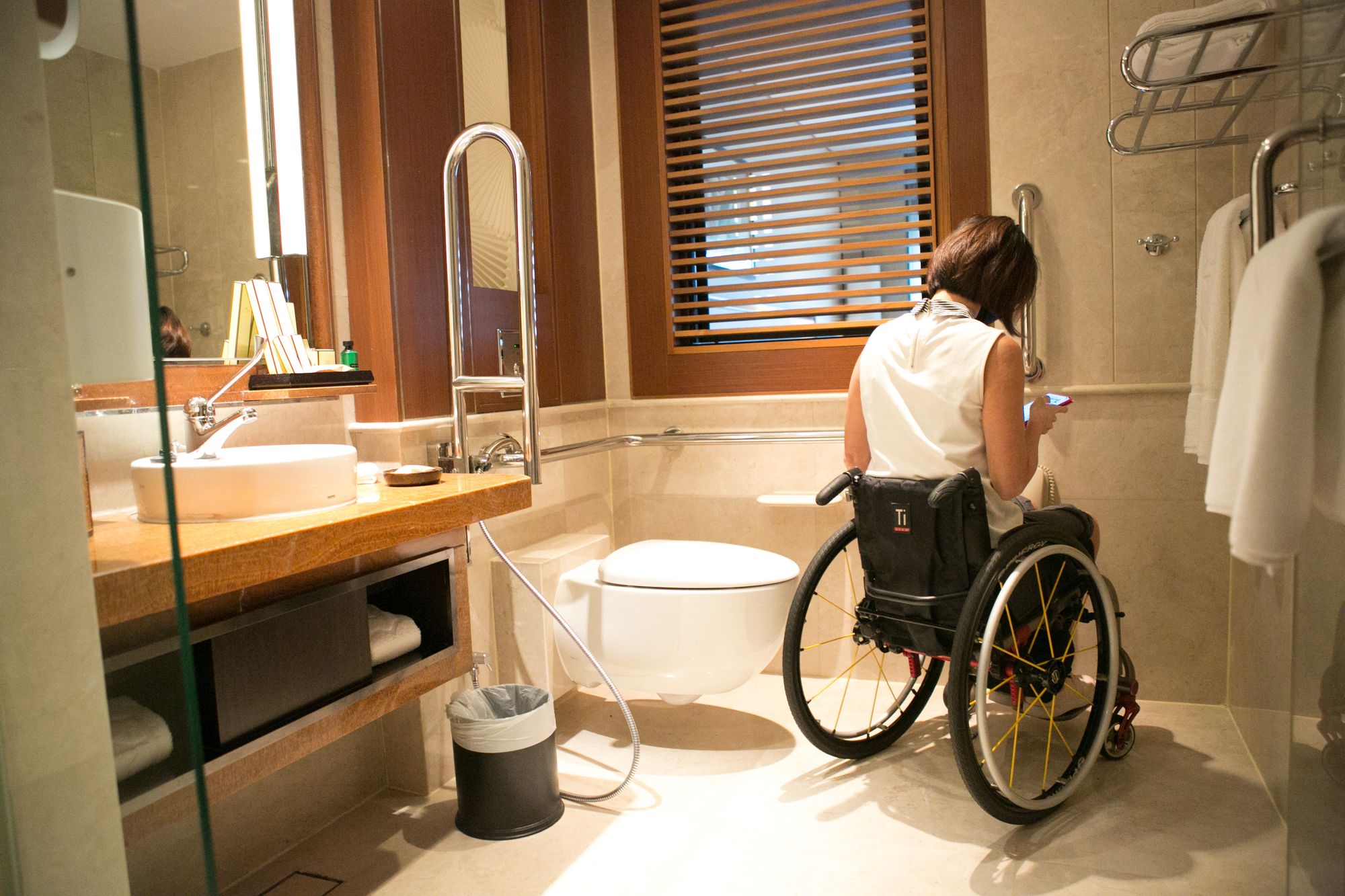
- Clear Floor Space: Accessible rooms should allow enough room for wheelchair users to turn around, approach furniture, and easily access all areas of the room. This often requires the removal of non-essential furniture and an emphasis on clear, unobstructed spaces.
- Lower Bed Heights: Beds in accessible rooms are often set lower to the ground to allow easier access for guests with mobility challenges. Adjustable beds can further increase comfort and convenience.
- Grab Bars and Support Rails: Bathrooms are an essential part of accessible room design. Bathrooms in accessible rooms typically include sturdy grab bars next to the toilet and shower, as well as non-slip flooring to prevent falls. Some hotels also offer roll-in showers, which are especially useful for wheelchair-bound guests.
- Accessible Fixtures: Sink height should be lower and easy to reach, and faucets should be operable with one hand, or even better, touchless to minimize the need for physical interaction. Mirrors should also be angled or mounted at a lower height to accommodate both standing and seated guests.
- Visual and Audible Alerts: Many hotels integrate auditory and visual fire alarms, emergency exits, and telephone systems to assist hearing- and visually-impaired guests. Visual alarms, such as flashing lights, can alert guests with hearing impairments to emergencies.
- Smart Technology: The integration of smart technology can improve accessibility and convenience. Automated lighting, adjustable thermostats, and voice-activated assistants are just a few of the innovations that enhance comfort and accessibility for all guests.
Public Spaces and Facilities
In addition to guest rooms, other areas of the hotel such as restaurants, spas, and meeting rooms must also be designed with accessibility in mind. Hotels should ensure that all public spaces are wheelchair accessible, with clear pathways and plenty of seating options. Restrooms in public areas should also be designed with accessibility features, such as wider stalls and grab bars.
Elevator access and floor layouts need to accommodate people with physical disabilities. Clear signage, both in visual and tactile formats, ensures that everyone can navigate the space easily. Audio cues for visually impaired guests and adjustable lighting in hallways and public spaces are additional thoughtful touches.
Hotels should also ensure that outdoor spaces, like swimming pools and parking lots, are fully accessible. Pool lifts, wider parking spaces, and accessible transportation options are part of making the entire experience smooth and enjoyable for all visitors.
Sensory Accessibility: Catering to Those with Hearing and Vision Impairments
In addition to physical accessibility, hotels must also accommodate guests with sensory impairments. For people with hearing impairments, the design might include vibrating alarm clocks, visual alerts for phone calls, and amplified telephones. Closed captioning on in-room televisions and an enhanced sound system with visual cues can help hearing-impaired guests enjoy television and movies without difficulties.
For those with vision impairments, hotels must prioritize tactile navigation aids. Braille signage and tactile floor indicators (such as contrasting floor markings or guide strips) help visually impaired guests find their way around. The use of high-contrast color schemes for visual elements also aids guests with low vision.
For all guests, providing accessible digital experiences is crucial. Many hotels now offer apps that allow guests to adjust their room’s temperature, lighting, and even order services directly from their smartphones. Ensuring that these apps are designed with accessibility features like voice control and screen reader compatibility further promotes inclusivity.

Inclusive Amenities and Services
Offering accessible amenities and services is another cornerstone of hotel design. Hotels can cater to guests with varying needs by providing assistive devices, such as hearing aids, wheelchair rentals, and mobility aids like walkers. A few hotels also have specialized concierge services to help plan accessible activities and assist with any other needs.
Customized Experiences: For guests who require a unique experience, hotels may also offer customized services, such as personal attendants or specialized room features tailored to specific needs. Some higher-end hotels offer services like personal transport and accessible excursions to nearby attractions.
Hotel Staff Training and Awareness
A hotel’s design can only go so far in accommodating guests with accessibility needs. Proper staff training plays a vital role in ensuring that guests are fully supported during their stay. Front desk employees, housekeeping staff, and restaurant servers should be knowledgeable about the hotel’s accessibility features and be trained to assist guests in a respectful, efficient manner.
Staff members should be prepared to assist guests with disabilities in ways that are both helpful and non-intrusive. For example, if a visually impaired guest requests assistance in navigating to the lobby, staff members should offer their arm or provide verbal directions, without assuming the person requires help in all situations.
Sustainability and Accessibility: A Growing Trend
An increasing number of hotels are recognizing the importance of sustainability alongside accessibility. Hotels are striving to design spaces that are not only accessible to everyone but also environmentally responsible. This includes implementing eco-friendly materials, energy-efficient systems, and low-impact design solutions in accessible areas.
For instance, energy-efficient lighting in accessible rooms can provide comfort and ease of use, while low-VOC paints and materials ensure that guests with sensitivities can enjoy their stay in a healthy environment. These efforts reflect a growing desire for hotels to cater to both human and environmental needs, with accessibility remaining a key factor.
The Future of Accessible Hotel Design
As the demand for accessible spaces continues to grow, the hotel industry is expected to keep innovating in this area. From smart rooms that integrate cutting-edge technology, to sensory-friendly zones and universal design principles, the future of hotel accessibility looks bright.
As accessibility becomes a defining feature of modern hospitality, hotels that prioritize both comfort and inclusivity will set themselves apart. The key will be balancing technological innovation with timeless design principles, ensuring that every guest feels welcome, comfortable, and cared for during their stay.